How Custom Rubber Grommets Enhance Product Performance
The Role of Custom Rubber Grommets in Product Design
Understanding Grommets and Their Applications
Custom rubber grommets serve as essential components in various products, especially where protection and support are crucial. Grommets, typically circular or oval in shape, fit into holes to protect wires, cables, and pipes from abrasion or damage. Their applications span multiple industries, including automotive, aerospace, electronics, and construction. By providing a barrier against moisture and dust, grommets ensure longevity and functionality, making them indispensable in product design. Understanding their role helps engineers optimize designs for durability, safety, and performance, ultimately enhancing the value of the end product.
The Importance of Customization in Rubber Grommets
Customization elevates the utility of rubber grommets beyond standard designs. Each application has unique requirements, such as size, shape, and material properties. Custom rubber molding allows manufacturers to create grommets tailored to specific environments and applications. For instance, in automotive settings, grommets must withstand high temperatures and vibrations, necessitating the use of robust materials like EPDM or silicone. Customization also facilitates the integration of features such as bonding surfaces or specialized tolerances that improve fit and performance. This level of personalization ensures that products meet rigorous standards while maximizing operational efficiency.
Key Materials Used in Custom Rubber Molding
The choice of material significantly impacts the performance of custom rubber grommets. Common materials include EPDM, silicone, neoprene, and natural rubber, each offering distinct advantages. EPDM, for example, excels in temperature resistance and is ideal for outdoor applications. Silicone provides excellent flexibility and can endure extreme temperatures, making it suitable for high-performance environments. Understanding the properties of these elastomers aids in selecting the right material for specific applications. Additionally, manufacturers often combine materials to create hybrid grommets that leverage the best traits of each, enhancing their effectiveness in sealing, vibration dampening, and overall durability.
Manufacturing Techniques for Custom Rubber Grommets
Injection Molding vs. Compression Molding: Which is Right for You?
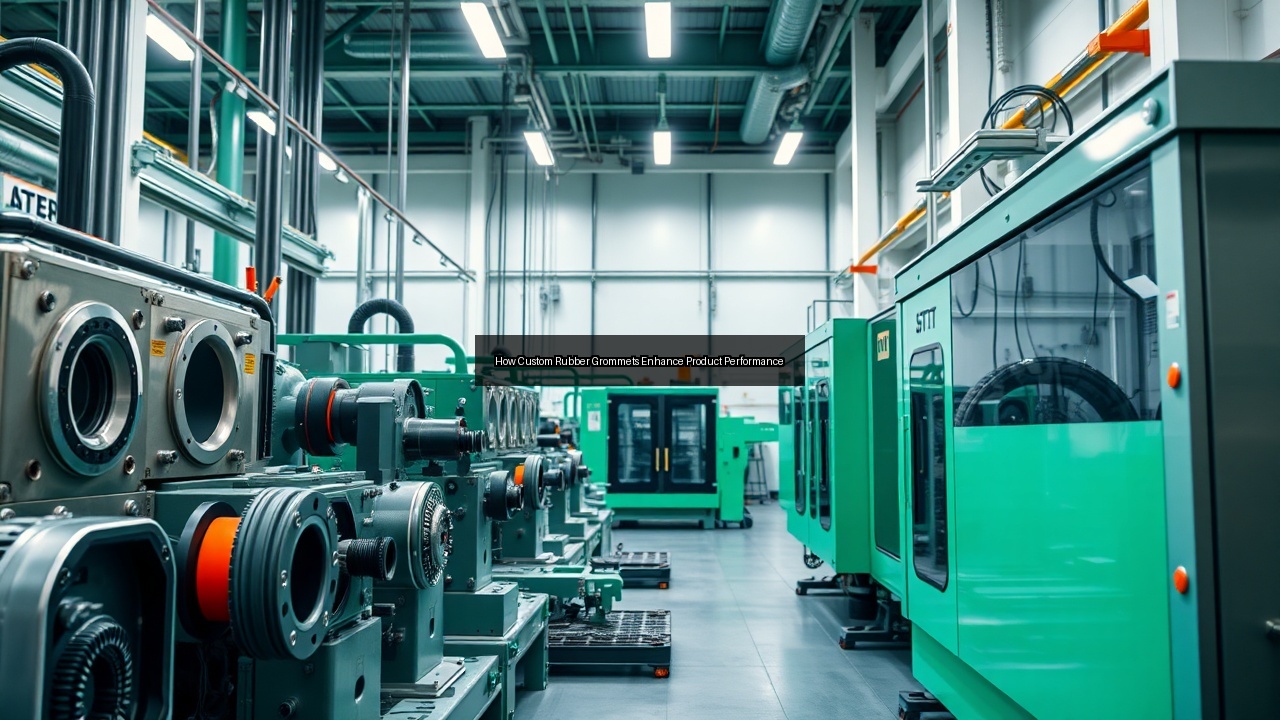
Choosing the right manufacturing technique for custom rubber grommets is crucial for achieving desired quality and performance. Injection molding involves injecting molten rubber rubber custom molds into custom molds under high pressure. This method allows for intricate designs and high-volume production. It’s particularly effective for creating grommets with precise tolerances, resulting in a superior fit. Compression molding, on the other hand, involves placing rubber into a heated mold and applying pressure to form the desired shape. Although it typically allows for lower production costs and faster turnaround times, it may not achieve the same level of detail as injection molding. Understanding these differences enables manufacturers to select the best process for their specific needs.
Exploring Transfer Molding Technologies
Transfer molding offers another avenue for producing custom rubber grommets, combining elements of both injection and compression molding. This technique involves preheating the rubber and transferring it into a closed mold cavity under pressure. Transfer molding can produce complex shapes and integrate multiple components, making it suitable for advanced engineering applications. It also allows for better control over material flow, which can enhance the quality and consistency of the final product. Manufacturers often choose transfer molding when designing grommets that require intricate features and precise tolerances, balancing efficiency with performance requirements.
The Role of Tolerances in Manufacturing Quality
Tolerances play a vital role in the manufacturing quality of custom rubber grommets. Precise tolerances determine how well a grommet fits its intended application, impacting everything from sealing effectiveness to vibration dampening. Manufacturers must adhere to strict specifications to ensure that grommets function as intended under various conditions. High-quality inspection processes during production identify any deviations from tolerances, allowing for immediate adjustments. This attention to detail not only enhances product reliability but also fosters trust between manufacturers and customers. Understanding and implementing the right tolerances ensures that custom rubber grommets meet rigorous standards across industries.
Enhancing Product Performance with Rubber Grommets
Reducing Noise and Vibration in Automotive Applications
Rubber grommets play a pivotal role in reducing noise and vibration in automotive applications. They act as cushioning elements that absorb shocks and vibrations from the engine and road, significantly enhancing passenger comfort. By strategically placing grommets in areas prone to vibration, manufacturers can minimize unwanted noise and prolong the lifespan of sensitive components. The engineering behind these grommets focuses on selecting the right elastomers, such as silicone or EPDM, that effectively dampen sound while maintaining flexibility. In doing so, manufacturers not only improve the driving experience but also enhance the perceived quality of the vehicle.
The Importance of Gaskets and Bushings in Sealing
Rubber grommets often work in conjunction with gaskets and bushings to create effective seals in various applications. Gaskets prevent fluid leakage, while bushings reduce friction in moving parts. Together, these components form a comprehensive sealing solution that protects sensitive equipment from environmental contaminants. Custom rubber molding allows manufacturers to design grommets that integrate seamlessly with these elements, ensuring optimal performance. Proper sealing is critical in industries like automotive and food packaging, where even minor leaks can lead to significant failures. Therefore, the relationship between grommets, gaskets, and bushings is integral to product reliability.
Applications in Food Packaging and Clean Room Environments
Custom rubber grommets find significant applications in food packaging and clean room environments. In food packaging, grommets help maintain hygiene by sealing openings and preventing contamination. They also ensure that packaging withstands temperature fluctuations and mechanical stresses without compromising integrity. In clean rubber custom molds room settings, grommets contribute to maintaining sterile conditions by sealing cables and pipes that pass through walls and barriers. The use of specialized materials, such as FDA-approved silicone, ensures compliance with health standards. By integrating custom rubber grommets into these critical applications, manufacturers enhance both safety and functionality.
Choosing the Right Manufacturer for Custom Rubber Grommets
Evaluating Expertise and Experience in Rubber Molding
Selecting the right manufacturer for custom rubber grommets requires careful evaluation of their expertise and experience in rubber molding. Manufacturers with a proven track record understand the nuances of custom rubber molding processes and can offer tailored solutions that meet specific requirements. It's essential to review their portfolio and case studies to gauge their ability to handle projects similar to yours. An experienced manufacturer will also have robust quality assurance processes in place to ensure that the final product meets all specifications and tolerances, making them a reliable partner for your rubber grommet needs.
Understanding ISO Standards in Manufacturing
ISO standards play a critical role in ensuring quality and consistency in the manufacturing of custom rubber grommets. Manufacturers adhering to ISO certifications demonstrate their commitment to maintaining high-quality production processes and materials. These standards cover various aspects of manufacturing, including design, production, and inspection. By partnering with an ISO-certified manufacturer, customers can trust that their grommets will meet stringent quality benchmarks and industry regulations. This focus on quality not only enhances product reliability but also protects the end-user from potential failures and issues down the line.
Tips for Selecting the Best Manufacturer for Your Needs
Finding the right manufacturer for custom rubber grommets requires careful consideration of several factors. Start by assessing their capability to meet your specific design requirements, including tolerances and materials. Look for manufacturers that offer a range of molding techniques, such as injection molding, compression molding, and transfer molding, ensuring they can adapt to your project's needs. Request samples of their work to evaluate the quality and performance of their products. Lastly, consider their customer service and support, as a manufacturer that values open communication can significantly enhance the collaboration process. By taking these steps, you can ensure a successful partnership for your custom rubber molding projects.