Harnessing the Power of NFC in Proportional Valve Driver Interfaces
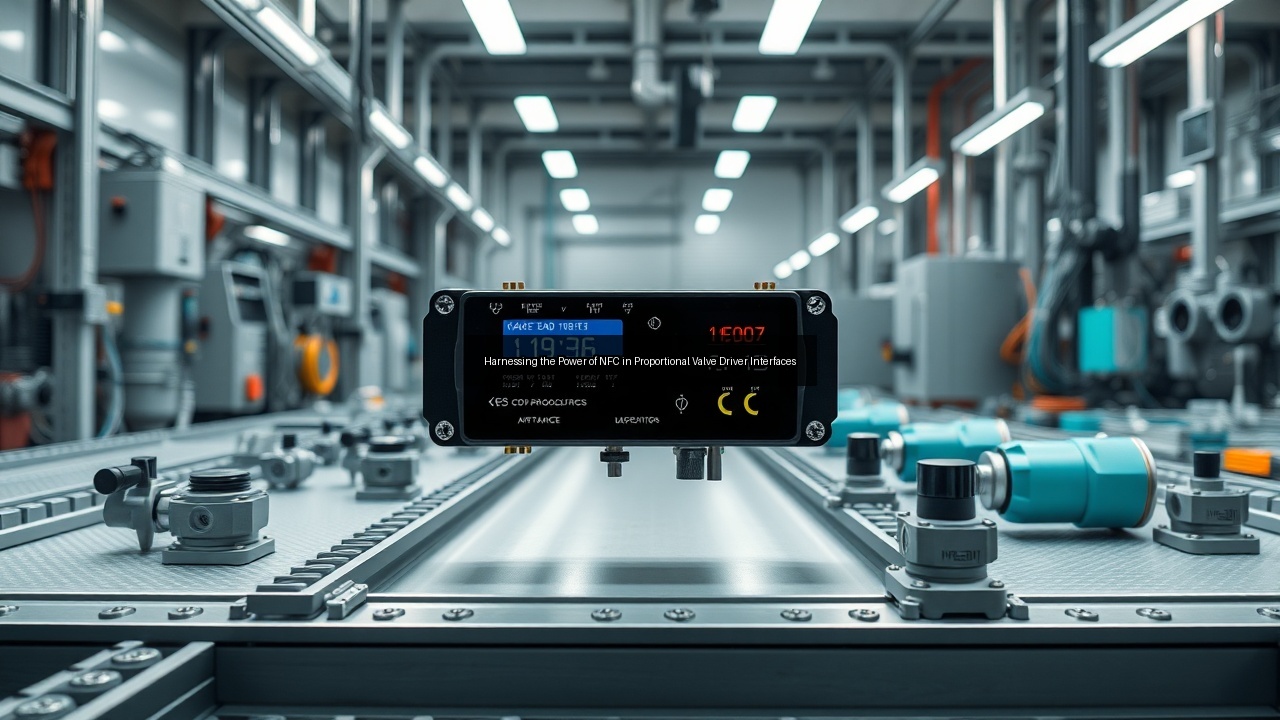
Introduction to NFC Technology in Proportional Valve Drivers
Understanding NFC and its Applications
Near field communication enables quick, secure data transfers between devices placed within a few centimeters of each other. Engineers apply this short-range wireless method to proportional valve driver units so operators can adjust settings without physical connectors or exposed ports. NFC supports read and write functions that update parameters on proportional control valve driver boards in seconds. Technicians use smartphones or dedicated readers to pull diagnostic data or push new calibration values directly to the valve electronics. This approach reduces wiring complexity in hydraulic systems and speeds maintenance cycles across industrial sites. Manufacturers embed NFC chips alongside existing control circuits to maintain compatibility with analog and digital signals already present in amplifiers and h-bridge drivers. The technology also logs usage history on the proportional valve driver itself, giving teams a portable record during field service calls.
The Importance of Interfacing in Proportional Valve Drivers
Proportional valve driver interfaces convert command signals into precise solenoid current control. Strong interfacing ensures the driver responds accurately to analog inputs, SAE J1939 messages, or local potentiometer adjustments. Without reliable interfaces, valves drift from setpoints and hydraulic performance suffers. Modern designs combine multiple input methods on a single PCB so the same proportional valve electronics can accept signals from joysticks, CAN bus networks, or near field communication readers. Clear interfacing also protects coils from overcurrent while delivering the exact voltage and current profiles required by each solenoid. Operators gain flexibility when they can switch between control modes without swapping hardware. Well-designed interfaces therefore improve both precision and uptime in demanding applications.
Components of Proportional Valve Driver Interfaces
Din Rail Mounting Solutions
Din rail mounting keeps proportional valve driver modules organized inside control cabinets. Standardized rails let technicians snap units into place quickly and remove them for updates without tools. Many din rail housings include labeled terminals for power, solenoid outputs, and communication lines, which simplifies installation of hydraulic valve packages. The compact format also supports side-by-side placement of multiple drivers, conserving panel space in mobile equipment and stationary plants across North America. Integrated status indicators, often configured as 4 led arrays, provide instant visual feedback on power, fault, and communication status. Din rail solutions further allow easy addition of heat sinks when high-current coils demand extra cooling, maintaining reliable operation of the entire proportional valve driver assembly.
Overview of Key Components: PCB, Solenoid, and Coils
The PCB forms the core of every proportional valve driver, carrying microcontrollers, power stages, and protection circuitry. It routes signals to the solenoid while monitoring feedback from current sensors. Solenoids attached to the valve spool convert electrical current into mechanical force, and the driver modulates that current to achieve smooth flow control. Coils wound around the solenoid pole pieces determine response speed and force output. Proper PCB layout minimizes electromagnetic interference between the high-current coil paths and sensitive analog sections. Engineers test each board under load to verify that voltage rails stay within tolerance even when multiple valves operate simultaneously. These components together deliver the repeatable performance operators expect from proportional valve electronics.
The Role of Potentiometers in Control Systems
Potentiometers supply manual override or setpoint adjustment on many proportional valve driver panels. Operators turn a potentiometer to fine-tune valve position when automatic commands are unavailable. The driver reads the potentiometer voltage and scales it into the required solenoid current. This local control remains useful during commissioning or emergency operation of hydraulic equipment. Some designs place the potentiometer on a detachable faceplate so users can adjust settings after the din rail unit is installed. Calibration routines stored in the driver firmware ensure the potentiometer range matches the full stroke of the valve spool. By combining potentiometer input with NFC updates, technicians gain both immediate manual control and wireless parameter changes.
Integrating NFC with Proportional Valve Driver Interfaces

How NFC Enhances Communication and Control
NFC brings contactless configuration to proportional valve driver interfaces. A technician taps a phone against the housing and instantly reads current settings or writes new ramp times and current limits. This method eliminates the need to open enclosures in dusty or wet environments common to hydraulic installations. NFC also supports secure pairing that prevents unauthorized changes to valve electronics. Once paired, the same link can stream real-time current and voltage data from the driver to a maintenance app. The short range of near field communication reduces the chance of interference with nearby wireless systems. Overall, NFC shortens setup time and improves accuracy when calibrating multiple valves on a single machine.
Comparing NFC with Traditional Communication Methods
Traditional methods such as RS-232 cables or manual potentiometer tweaks require physical access and extra hardware. NFC removes those steps while adding encryption options that older serial links lack. USB connections still serve well for bulk data transfer or firmware flashing, yet they expose ports to contaminants. SAE J1939 remains essential for vehicle networks, but it demands proper termination and addressing. NFC complements these standards by providing a secondary, low-power channel that works even when the main bus is offline. Operators therefore choose the best tool for each task without replacing existing proportional valve driver infrastructure.
The Role of USB in Data Exchange
USB ports on proportional valve driver modules enable high-speed data exchange during bench testing or production programming. Engineers connect a laptop to download logged performance data or upload custom current profiles for specific coils. USB also supplies power for initial configuration before the unit receives its main supply voltage. Many drivers include a protective cover over the USB connector to maintain IP ratings once the cable is removed. When combined with NFC, USB handles larger files while NFC manages quick field adjustments. This dual approach keeps both factory and service workflows efficient across North American manufacturing and mobile equipment sectors.
Case Studies and Applications
NFC in Hydraulic Systems: A Focus on Axiomatic and Atos
Axiomatic and Atos both integrate NFC into their proportional valve driver lines for hydraulic applications. Field teams use NFC readers to adjust pressure compensation curves on Atos valves without removing protective covers. Axiomatic units mounted on din rail inside operator cabs accept NFC commands that update SAE J1939 parameters on the fly. Both brands report reduced commissioning time because technicians no longer climb ladders to reach potentiometers. Hydraulic system integrators in forestry and construction equipment value the ability to clone settings from one valve to another via NFC. The result is consistent performance across fleets while lowering the risk of configuration errors.
Implementing Pulsar Technology with Proportional Valve Drivers
Pulsar technology adds high-frequency dither to solenoid drive signals, reducing stiction in valve spools. When paired with NFC-enabled proportional valve drivers, operators can enable or tune the dither amplitude directly from a handheld device. The driver stores multiple dither profiles and applies the correct one based on fluid temperature or load feedback. This flexibility improves valve response in varying conditions without hardware changes. Integrators combine Pulsar outputs with standard analog or CAN commands on the same PCB, giving users a single module for diverse hydraulic tasks. Real-time NFC monitoring confirms that dither remains within coil thermal limits during extended operation.
Real-World Examples in North America
Equipment builders in North America deploy NFC-configured proportional valve drivers on agricultural sprayers and mining trucks. One fleet operator replaced manual potentiometer adjustments with NFC routines and cut average setup time by 40 percent. Another manufacturer uses NFC to verify that each valve driver matches the drawing specifications before shipping. Digital display units mounted on the cab show live current and voltage values pulled via NFC, giving drivers immediate confirmation of system health. These deployments demonstrate how near field communication streamlines both production and field service for proportional valve electronics across the continent.
Frequently Asked Questions

What are the advantages of using NFC in valve interfaces?
NFC removes the need for cables or exposed connectors on valve interfaces, cutting installation time and protecting electronics from dust and moisture. Operators adjust parameters on proportional valve driver units in seconds by simply tapping a phone or reader. The short range of near field communication prevents accidental connections with distant devices and adds a layer of security. Maintenance logs stored on the driver itself travel with the valve, giving service teams instant access to history. NFC also supports rapid cloning of settings across multiple units, which proves valuable during large hydraulic system builds. Overall, the technology improves both safety and productivity in industrial environments.
How does the SAE J1939 standard relate to proportional valve electronics?
SAE J1939 defines a CAN-based protocol that many proportional valve electronics use for networked control. Drivers receive command messages containing desired current or spool position and reply with actual values and diagnostic codes. This standard allows a single cab controller to manage dozens of valves without dedicated analog wiring. NFC complements J1939 by letting technicians change node addresses or gain settings locally even when the vehicle bus is powered down. The combination gives equipment designers both reliable vehicle integration and convenient field configuration options for proportional control valve driver modules.
What voltage specifications are important for digital displays in valve drivers?
Digital displays on valve drivers typically operate from 9 to 32 VDC to match common mobile and industrial supplies. The driver must regulate this wide input range down to stable levels for the display and internal logic. Overvoltage protection prevents damage during jump starts or alternator spikes. Low-voltage cutoff circuitry ensures the display blanks cleanly rather than showing erratic readings when supply drops. Many units also provide a 4 led bar graph alongside the numeric display to indicate coil current as a percentage of maximum. Proper voltage handling keeps operators informed without adding extra power conditioning hardware to the proportional valve driver assembly.
See Also
- SAE J1939 Protocol and Its Impact on Proportional Valve Drivers in North America
- A Comprehensive Guide to Understanding Proportional Control Valve Drivers
- Integrating USB Technology with Proportional Valve Drivers for Enhanced Functionality
- Demystifying the H-Bridge in Proportional Valve Driver Circuits
- How to Choose the Right Proportional Valve Driver for Your Application